Every four years or so, Bitcoin’s block reward — the amount of new bitcoin miners earn for adding a block to the chain — cuts in half. This “halving” is one of the most closely watched events in crypto, partly for its real effect on new supply issuance, and partly because of a widely discussed (and widely contested) narrative linking halvings to broader market cycles.
How the halving mechanism actually works
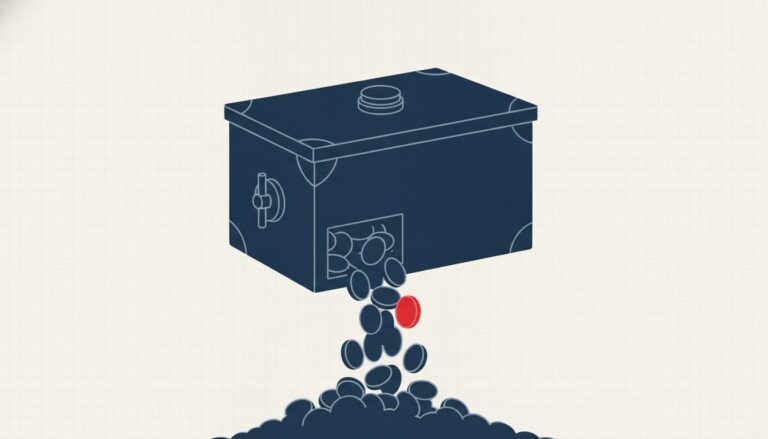
Bitcoin’s protocol reduces the block reward by 50% every 210,000 blocks, which works out to roughly every four years given the network’s approximately 10-minute average block time. This was built into Bitcoin’s original code as part of its fixed, disinflationary issuance schedule, covered in more depth in our what is Bitcoin guide. The mechanism is fully automatic and enforced by consensus rules every node checks; no company or individual decides when a halving happens or how large it is, which is a meaningful contrast with monetary policy decisions made by a central bank.
A brief history of past halvings
Bitcoin has undergone several halvings since its 2009 launch: the first in November 2012, the second in July 2016, the third in May 2020, and the fourth in April 2024. Each halving cuts the block subsidy paid to miners by half, and because that subsidy is the primary source of new bitcoin entering circulation, each halving slows the rate of new supply growth. This guide intentionally doesn’t cite historical price figures around these events; for that, see our live Bitcoin page and independent historical data sources rather than any number baked into this article, since even well-sourced historical figures can be presented misleadingly out of context.
The direct economic effect: slower new supply
The most concrete, verifiable effect of a halving is on issuance: the rate at which new bitcoin enters circulation is cut in half overnight. This also directly affects miner economics, since miners earn less new bitcoin per block for the same computational effort, all else equal, which historically has pressured smaller or less efficient miners and has sometimes been followed by industry consolidation as less competitive operations shut down or upgrade equipment. This dynamic is a genuine, measurable economic effect of the halving, distinct from and more reliably established than any claim about its effect on price.
The “four-year cycle” narrative
A popular narrative holds that Bitcoin moves through a roughly four-year market cycle synchronized with the halving schedule — a period of accumulation, a bull run, a peak, and a subsequent decline, repeating after each halving. This pattern has been widely discussed following prior halvings, and some market participants treat it as a meaningful framework for understanding Bitcoin’s price history. It’s important to be clear about what this actually is: a pattern observed after a relatively small number of historical halvings, not a proven causal mechanism supported by rigorous statistical evidence, and it coexists with a market that has changed substantially over time — growing institutional participation, the introduction of spot ETFs (covered in our spot ETF guide), and a very different regulatory and macroeconomic backdrop than in earlier cycles, all of which make simple historical extrapolation a shakier basis for prediction than it might first appear.
Why correlation isn’t causation here
Even if halvings and past price cycles have appeared to line up historically, that doesn’t establish that the halving itself causes the cycle. Macro conditions (interest rates, broader risk appetite), regulatory developments (covered in our policy-to-price playbook), technology adoption trends, and market structure changes all move on their own timelines that may or may not meaningfully relate to the halving schedule. A small number of historical repetitions is also, statistically, a thin basis for confident prediction, regardless of how often the pattern gets repeated in commentary or how confidently it’s presented as an established rule.
How miners actually adapt
Following a halving, miners whose operating costs (electricity, hardware, facility overhead) exceed what the reduced block reward can sustain at prevailing prices face a genuine economic squeeze, and some historically have shut down or sold operations as a result. Others adapt by upgrading to more efficient hardware, relocating to lower-cost energy sources, or consolidating through mergers and acquisitions. This process, sometimes called a “miner capitulation” when it happens sharply, is a real, observable market dynamic distinct from the more speculative four-year price-cycle narrative, and it’s driven directly by the halving’s verifiable effect on mining economics.
How the halving interacts with a network security metric called hashrate
Bitcoin’s hashrate, the total computational power securing the network, generally reflects miner profitability over time: when mining is more profitable, more computing power tends to join the network, and when it’s less profitable, some tends to leave. A halving, by cutting the reward miners earn for that same computational effort, can put downward pressure on hashrate in the near term if prices don’t adjust to compensate, though hashrate has historically tended to recover and grow over longer periods as technology improves and the network matures. Hashrate is itself a data point worth understanding on its own terms, not simply as another proxy for the cycle narrative.
What this means for how you read halving coverage
Treat halving coverage as useful context about Bitcoin’s supply mechanics and mining economics, genuinely verifiable facts about how the protocol works. Treat any specific price prediction tied to “the four-year cycle” with real skepticism, regardless of how confidently it’s presented, since past patterns in a market this young are not a reliable guide to future price behavior, and the market’s structure has already changed meaningfully since the earliest halvings occurred.
Not financial advice. This guide is educational and explains how a rule, market, or process works. It is not a recommendation to buy, sell, or hold any asset, and Crypto News US does not know your financial situation. Crypto assets are volatile and can lose value quickly; do your own research and consider talking to a licensed financial adviser before making decisions.
Frequently asked questions
When is the next Bitcoin halving?
Halvings occur roughly every four years based on block count, not a fixed calendar date, so the exact date shifts slightly depending on actual block production speed. Check current block-height trackers or our live Bitcoin page for the most up-to-date estimate rather than relying on a fixed date from any single source, since even a small variation in average block time compounds meaningfully over 210,000 blocks.
Does a halving guarantee a price increase?
No. A halving is a verifiable change to new supply issuance, but it does not guarantee any specific price outcome. Price depends on many factors beyond supply issuance, including demand, macro conditions, and market sentiment, none of which the halving mechanism itself controls.
Will halvings continue forever?
No. Halvings will continue until the block subsidy effectively reaches zero, expected sometime around the year 2140 given the current schedule, after which miners will be compensated solely through transaction fees rather than newly issued bitcoin.
What happens to miners right after a halving?
Miners immediately earn half as much new bitcoin for the same computational work, which can squeeze profitability for less efficient operations, sometimes leading to shutdowns, hardware upgrades, or industry consolidation depending on prevailing prices and operating costs.
Frequently asked questions
When is the next Bitcoin halving?
Halvings occur roughly every four years based on block count, not a fixed date; check current block-height trackers for the latest estimate.
Does a halving guarantee a price increase?
No. It verifiably changes new supply issuance but does not guarantee any specific price outcome.
Will halvings continue forever?
No. They will continue until the block subsidy effectively reaches zero, expected around the year 2140 under the current schedule.
What happens to miners right after a halving?
Miners immediately earn half as much new bitcoin for the same work, which can squeeze profitability and lead to shutdowns or consolidation.
Last updated August 12, 2026
Markets Editor at Crypto News US, covering Bitcoin, US market structure and the macro backdrop that moves them: rates, the dollar and ETF flows, from New York.